Armchair Science
Encourage patrons to contribute to community science, and explore the biodiversity of Montana.
Getting Started
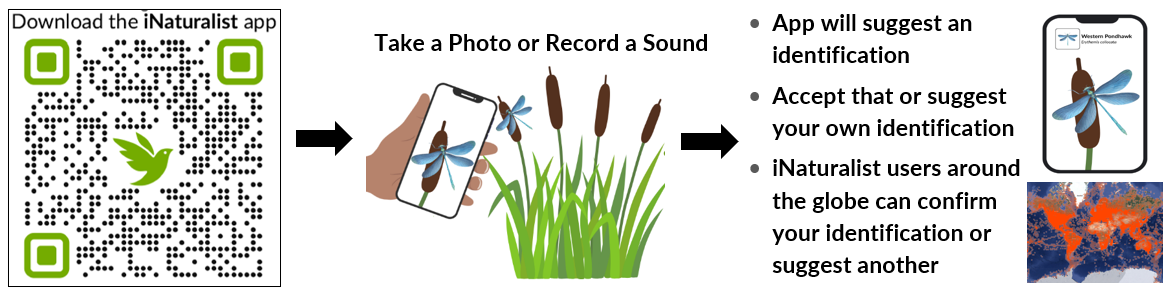
Citizen Science
This program and those listed below will offer different variations on the citizen science theme in Montana at the micro and macro level. Some will feature the state as a whole, others will be so specific you can narrow it down to what is observable outside the window in your library. Some of these projects will encourage your library to create an iNaturalist project limited to your local footprint, or area while others will rely on the Montana iNaturalist Place Page.
Resources
Armchair Scientist Night
Armchair Scientist Night is an entirely indoor and beginner friendly program where adults contribute to real biodiversity research by identifying species on iNaturalist.
Program Overview
Participants use library computers to log into iNaturalist and act as community identifiers. They review photos taken in the local county and help confirm species identifications. Use the Montana Field Guide and books from your library collection to confirm identifications and enhance discussions.
Learning Outcomes
 Understand how identification and verification works on iNaturalistContribute to scientific datasets without outdoor explorationBuild digital literacy and observational reasoning skillsSupport local biodiversity monitoring
Audience
Adults, especially beginners new to citizen science, and lifelong learners.
Program Length
10 minutes Introduction
40 to 60 minutes Identification activity
10 to 15 minutes Discussion and reflection
Preparation Checklist
 Create or test iNaturalist accounts so you can demonstrate the site Reserve a space with enough library computers and reliable internet Print sign up sheets Provide access to field guides in print or digital form Prepare observations from iNaturalist to demonstrate filtering and identifying
Sample Agenda:
Welcome and Introductions (5 minutes)
Introduce the concept of community science and explain how iNaturalist identifiers help confirm species and support biodiversity research. Clarify that no prior experience or outdoor exploration is needed.
Demonstrate the Tools (10 minutes)
Have participants log into iNaturalist using their accounts.
Show them how to filter observations by your local county.
Explain species identification basics and how multiple confirmations lead to Research Grade.
Hands-On Identification (40 to 60 minutes)
Start with species participants feel more confident about.
Use field guides, physical and digital references as needed.
Work in pairs or small groups for support.
Discussion and Reflection (10 to 15 minutes)
Bring the group together to talk about interesting or challenging observations they encountered. Highlight how their identifications directly contribute to research and conservation.
More Indoor programming ideas:

Age: Adults, middle grades and teens
Effort: Low
Armchair Travel is a self-guided, search of plants and animals all around the world using library books and web searches to learn about and confirm identifications in iNaturalist.

Age: Scalable
Effort: Low to high depending on your choice of variations
The Endemic or Invasive? Sorting wall is an interactive, walk‑up activity where patrons sort species images into two categories: species native to Montana and species that are invasive. Using Velcro, magnets, or laminated cards, patrons can explore biodiversity, learn ecological concepts, and optionally use iNaturalist to deepen their understanding.

Age: Scalable
Effort: Low to high depending on your choice of variations
The Tribal Nations Biodiversity Spotlight is a rotating mini‑exhibit highlighting plants and animals that have ecological or publicly documented cultural significance to Tribal Nations in Montana.

Age: Scalable
Effort: Low to high depending on your choice of variations
A Phenology Tracking Wall is a simple and fun way for people to watch how nature changes during the year. By tracking these signs, communities learn how plants, animals, and seasonal patterns shift all year long. Patrons can add their own observations to the wall. Examples include: first robin sightings, budding lilacs, first snowfall, or other seasonal moments.

Age: Adults, middle grades and teens
Effort: Low
Window Watch is a self-guided, passive observation station inside the library. Patrons watch insects, birds, and other wildlife from a window and may optionally upload sightings to an iNaturalist project dedicated to the library property.